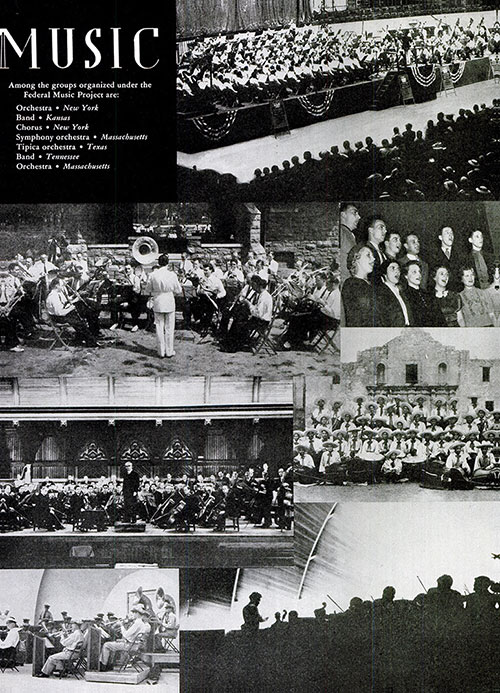
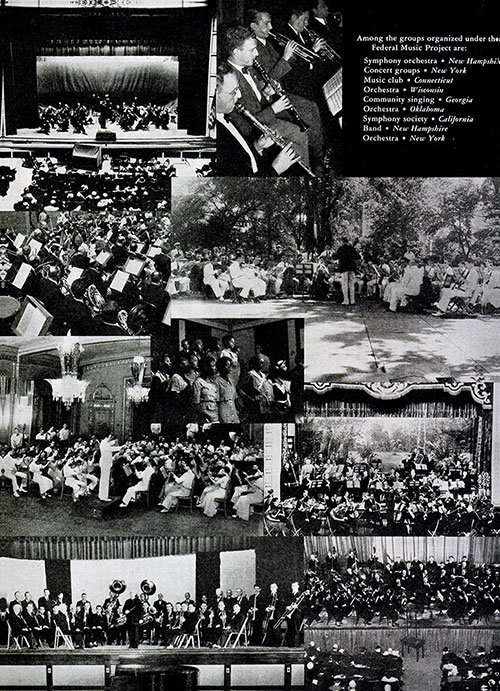
The Federal Music Project was not simply an orchestra program. In Oklahoma it connected professional relief employment, symphonic organizations, dance bands, music education, small-town activity and a statewide argument over where federal music resources should be centered.
Research statusThis feature combines Oklahoma-specific research with a 1938 national WPA report and National Archives finding-aid material. The surviving research package is substantial but not exhaustive. Several original Oklahoma letters and newspaper items cited by later histories have not yet been recovered.
The national program
The WPA’s 1938 Inventory: An Appraisal of Results of the Works Progress Administration described the Federal Music Project as public work for trained musicians and teachers. At one point the national project employed nearly 16,000 people; by the report date it employed about 10,000.
The report described 40 symphony orchestras, roughly twice as many smaller concert orchestras, 69 bands, 52 dance orchestras, 30 opera and choral units, and additional choruses and vocal groups. It reported more than 4,500 performances per month with average monthly attendance above 3.1 million, plus a large teaching program.
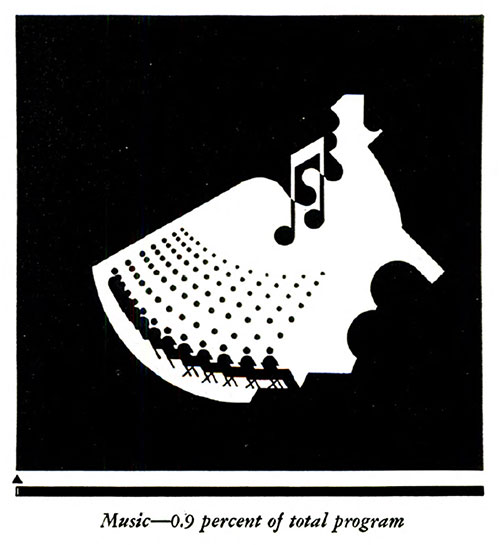
1938 national WPA report, music section. Public-domain source; not Oklahoma-specific.Federal Music Published imagery reproduced from the national WPA report.National context for the program that operated in Oklahoma.
What the Oklahoma evidence establishes
Tulsa federal symphonic activity
Oklahoma Historical Society research places the Tulsa Federal Music Project symphony approximately from January 1936 through August 1937. The precise legal continuity between Tulsa’s earlier civic symphony and the federally supported orchestra remains unresolved.
Oklahoma Federal Symphony
Oklahoma City’s federal orchestra was licensed in 1937 to serve the state. Ralph Rose was its first conductor, and its first Oklahoma City concert was January 3, 1938. The first season included more than fifty concerts, including children’s and statewide programs.
Ardmore and Shawnee dance bands
The Oklahoma Historical Society identifies Federal Music Project dance bands in Ardmore and Shawnee. These were professional relief-program ensembles and should not be merged with unrelated civic or school bands in the same communities.
Music education
Oklahoma research reports that Federal Music Project teachers were placed in 92 small Oklahoma schools. This makes school-music infrastructure—not only public performance—a major part of the project’s Oklahoma legacy.
African American music
Oklahoma project descriptions include an African American dance band. The record belongs within the broader history of Black professional and institutional music in Oklahoma and requires continued source-level reconstruction.
Okmulgee proposal
Dean Richardson’s proposed Oklahoma program included an Okmulgee band. The proposal is documented; completed operation of that specific ensemble has not yet been independently established and remains a research lead.
A statewide employment and cultural program
The reviewed Oklahoma research reports that Dean Richardson identified roughly 500 people claiming to be professional musicians who were on relief and proposed symphonic groups for Tulsa and Oklahoma City along with recreation workers, an African American dance band, an Okmulgee band and other projects. A separate Oklahoma WPA overview reports more than 200 musicians participating through teaching, music research, small-town orchestras and dance-band work.
Those figures describe different points and categories in the program and should not be treated as a single headcount. They do, however, show that Oklahoma’s Federal Music Project was broader than the two principal symphony stories.
Archives and what still needs to be found
The National Archives identifies Federal Music Project records in Record Group 69, including state narrative reports, education and employment files, performance and attendance records, folk-music material, programs, schedules, press clippings and correspondence. The Oklahoma research package identifies Oklahoma File 651.311 and several 1937 correspondence leads, but those underlying letters were not included in the recovered collection.
Important limitationNo verified original newspaper clipping about the Tulsa–Oklahoma City “Music War” is included in the research package. Failure to retrieve an item is not evidence that it never existed.
This record integrates Federal Music Project and later WPA Music Program material across Oklahoma while preserving city, county, ensemble, and institutional identities as separate records.
What the evidence shows
Oklahoma's Federal Music Project operated under state director Dean Richardson.
Richardson's planning identified a pool of roughly 500 people claiming to be professional musicians on relief; this was not the number simultaneously employed.
The Oklahoma program included a Tulsa symphonic project, later Oklahoma City symphonic activity, music instruction in ninety-two small schools, an African American dance-band project, and dance-band projects in Ardmore and Shawnee.
The program also touched Okmulgee and other local projects through budget, orchestra, or community-music activity.
Tulsa's relief-supported symphony originated under FERA in 1934 and moved into WPA structures in 1935.
Federal support in Tulsa collapsed in 1937 after budget cuts and a dispute over federal requirements, local sponsorship, publicity, and control.
Oklahoma City's orchestra then became the major symphonic relief project; the Oklahoma Federal Symphony was presented as a statewide orchestra and toured Oklahoma in 1938.
Rural music teaching was a major statewide component. By December 1936, the program had instructors in seventy communities and the broader program is documented as placing music teachers in ninety-two small schools.
County / locality links
Tulsa County — Tulsa relief-supported symphony; policy conflict; later musician transfers.
Oklahoma County — Oklahoma City / Oklahoma Federal Symphony; statewide orchestral administration and civic sponsorship.
Carter County — Ardmore Federal Music Project dance-band / orchestra context.
Pottawatomie County — Shawnee Federal Music Project dance-band context.
Okmulgee County — documented FMP project/budget/orchestra context.
Statewide / unresolved locality — African American dance-band project.
Rural Oklahoma — music teachers and band leaders in small communities; community-level list remains incomplete.
How records are distinguished
The statewide African American dance band is documented, but its formal name, exact locality, director, personnel, venues, and performance schedule remain unresolved.
Ardmore and Shawnee dance-band projects must remain separate from the statewide African American dance-band record.
Program-wide date ranges must not automatically be assigned as exact ensemble lifespans.
The Tulsa relief-supported symphony must not be silently merged with later Tulsa symphony organizations.
The Oklahoma Federal Symphony / Oklahoma City symphonic record requires phase-specific naming and sponsorship chronology.
Public-history themes
Professional musical labor during the Great Depression.
Music education as public service in rural and small-town Oklahoma.
Publicly supported symphonic, popular, dance, radio, and community music.
African American participation within a segregated and unequal social system.
Federal versus local control of cultural institutions.
Transition from temporary relief projects to locally supported institutions.
Statewide touring and geographic access to professional music.
Current coverage
Documented now
Statewide FMP overview.
Tulsa relief-symphony chronology with the 1937 funding/control dispute.
Oklahoma City / Oklahoma Federal Symphony chronology with explicit phase controls.
Rural teaching program and ninety-two-school figure.
Ardmore and Shawnee dance-band existence with disclosed personnel/date gaps.
Documented with important gaps
African American dance-band project: existence yes; locality/name/personnel unresolved.
Okmulgee and smaller community projects where activity is established but detailed chronology remains incomplete.
Research gaps
Complete roster and payroll records.
Exact list of the ninety-two schools / rural teaching locations.
Complete repertory and concert itineraries.
Full racial and gender employment breakdown.
Radio-broadcast schedules.
Surviving scores, programs, photographs, correspondence, and local sponsor records.
Sources used
The Federal Music Project and Its Oklahoma Program
Kenneth E. Hendrickson Jr., “Politics of Culture: The Federal Music Project in Oklahoma,” preserved in the research archive.